AI Insights & News

Insights for working smarter with AI

Practical AI news, automation tips, and real-world insights to help your business stay ahead.

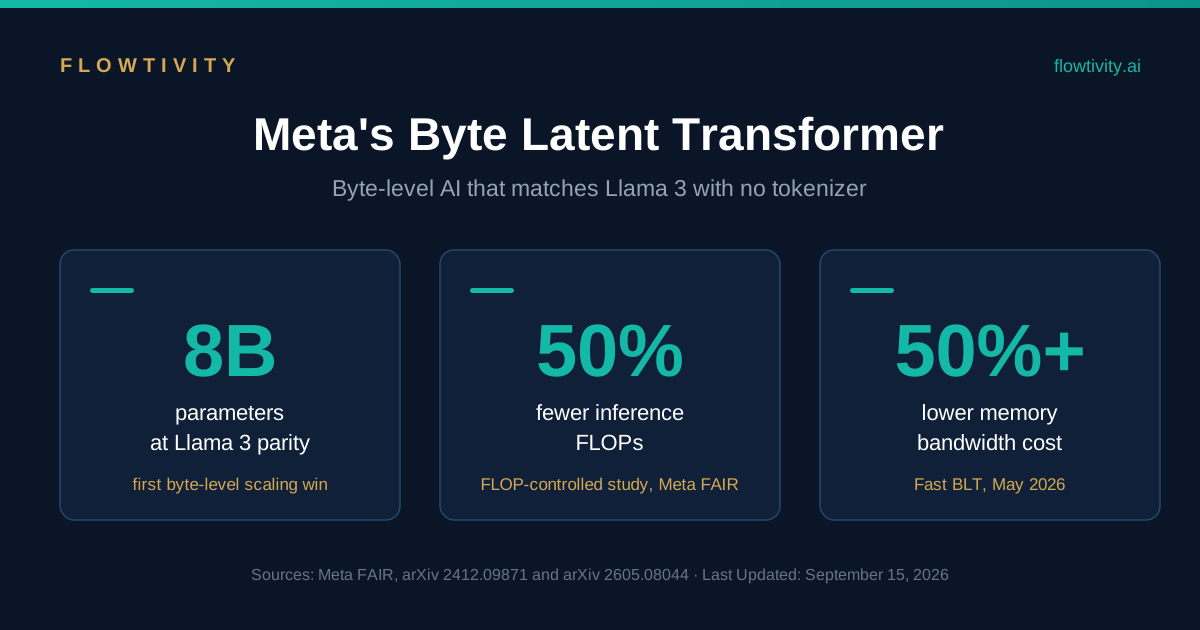
Meta's Byte Latent Transformer Explained: Why Byte-Level Models Could Replace Tokenization

Meta's Byte Latent Transformer Explained: Why Byte-Level Models Could Replace Tokenization

Meta's Byte Latent Transformer removes the tokenizer, matches Llama 3 at 8B scale with up to 50% fewer inference FLOPs, and Fast BLT cuts memory bandwidth by over 50% again.

15 September 202611 min read
Read more
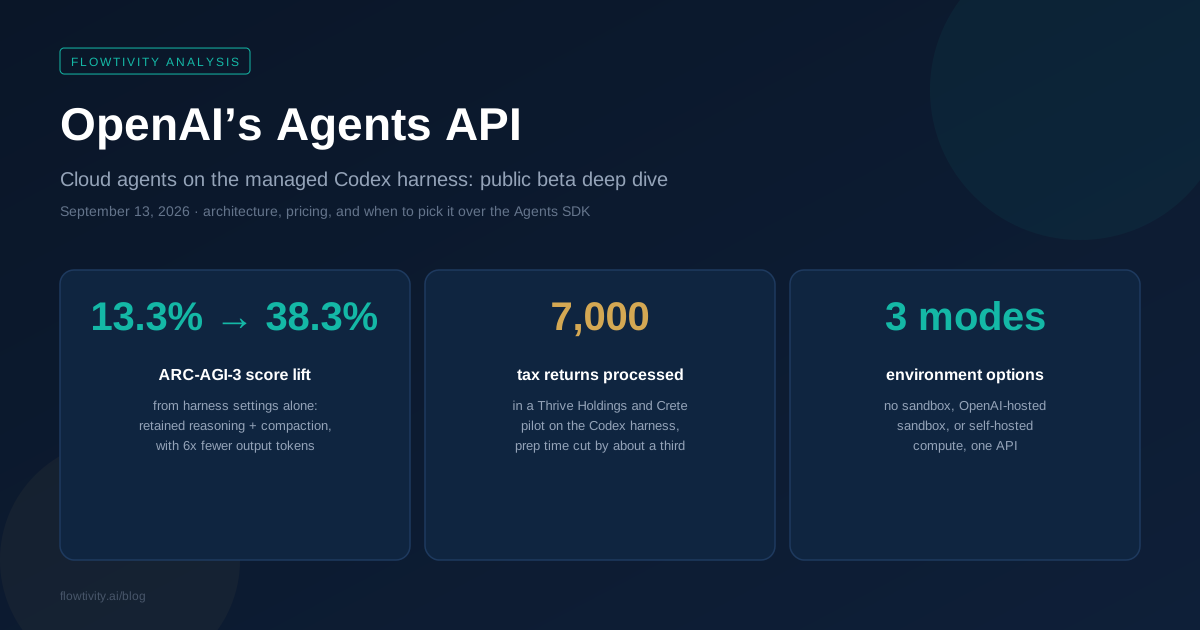
OpenAI's Agents API Explained: Cloud Agents on the Managed Codex Harness

OpenAI's Agents API Explained: Cloud Agents on the Managed Codex Harness

OpenAI's Agents API runs the open source Codex harness as a managed cloud service: durable sessions, automatic context compaction, multi-agent orchestration, and optional sandboxes. How the architecture works, what it costs, and when to choose it over the Agents SDK.

13 September 202613 min read
Read more
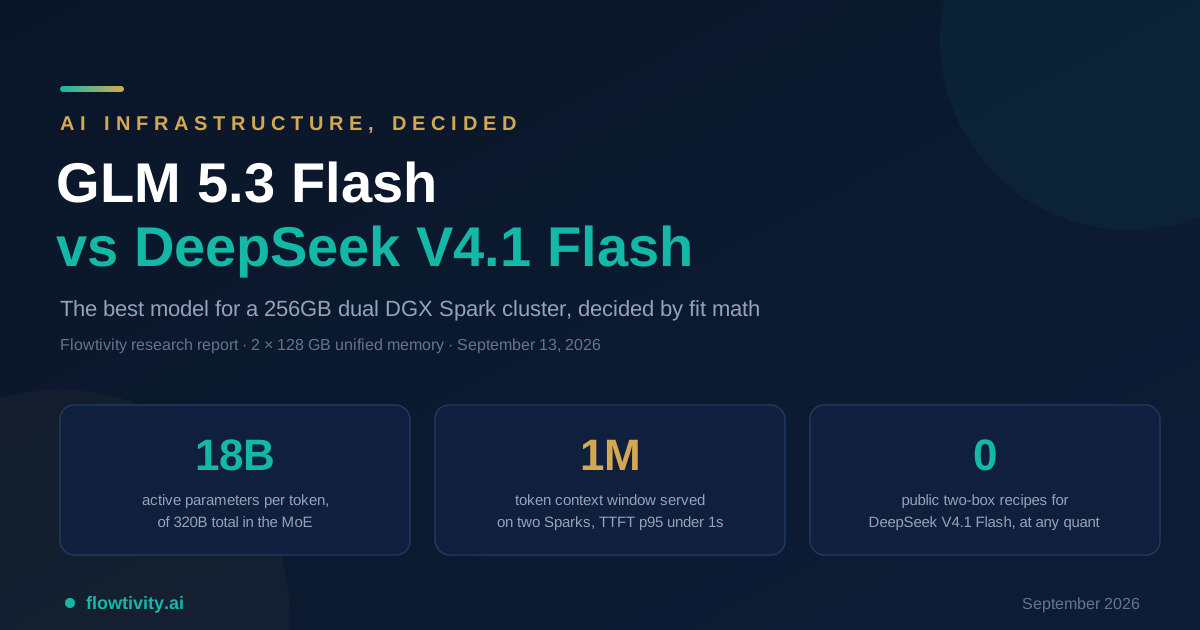
GLM 5.3 Flash vs DeepSeek V4.1 Flash: The Best Model for a 256GB Dual DGX Spark Cluster

GLM 5.3 Flash vs DeepSeek V4.1 Flash: The Best Model for a 256GB Dual DGX Spark Cluster

GLM 5.3 Flash beats DeepSeek V4.1 Flash on a 256GB dual DGX Spark cluster, not on raw quality but on fit: a documented two-Spark recipe at 29-70 tok/s with 1M context, while DeepSeek V4.1 Flash needs three to four boxes. Full comparison, tok/s math, and the serving recipe.

13 September 202613 min read
Read more
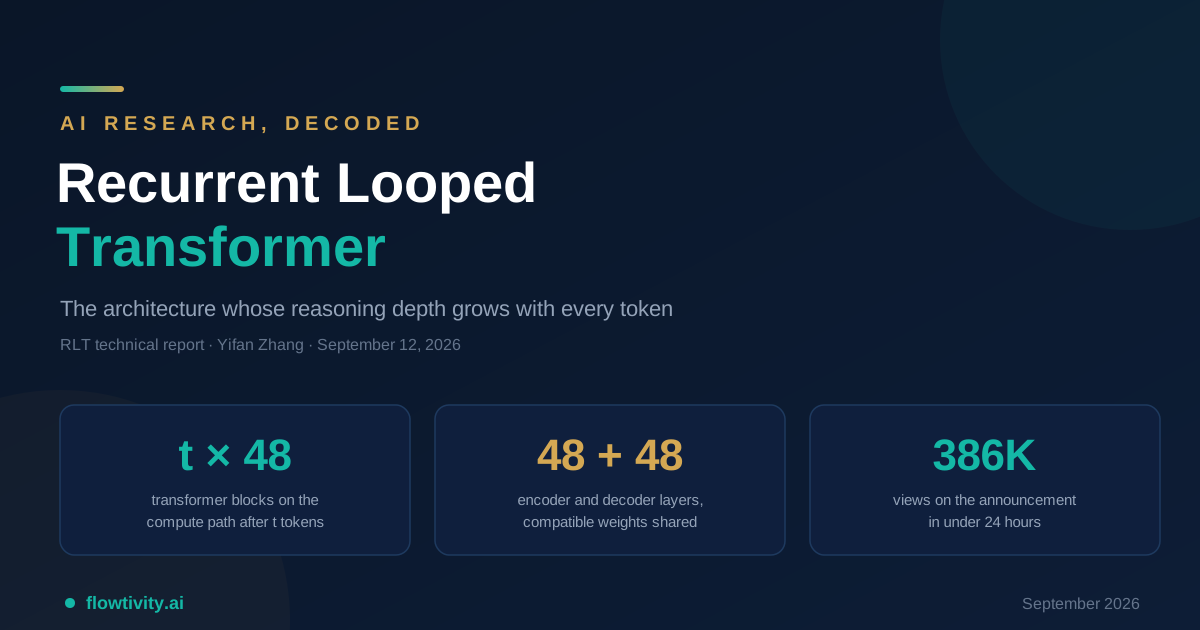
Recurrent Looped Transformer Explained: What Infinite Reasoning Depth Actually Means

Recurrent Looped Transformer Explained: What Infinite Reasoning Depth Actually Means

The Recurrent Looped Transformer (RLT) re-runs one 48-layer decoder stack recurrently, so its compute path grows to t × 48 blocks while per-token cost stays flat. Announced by Yifan Zhang on September 12, 2026, it drew 386,100 views in a day and ships no benchmarks yet. Here is the architecture, the honest reading of infinite reasoning depth, and what it means for AI agents.

13 September 20269 min read
Read more
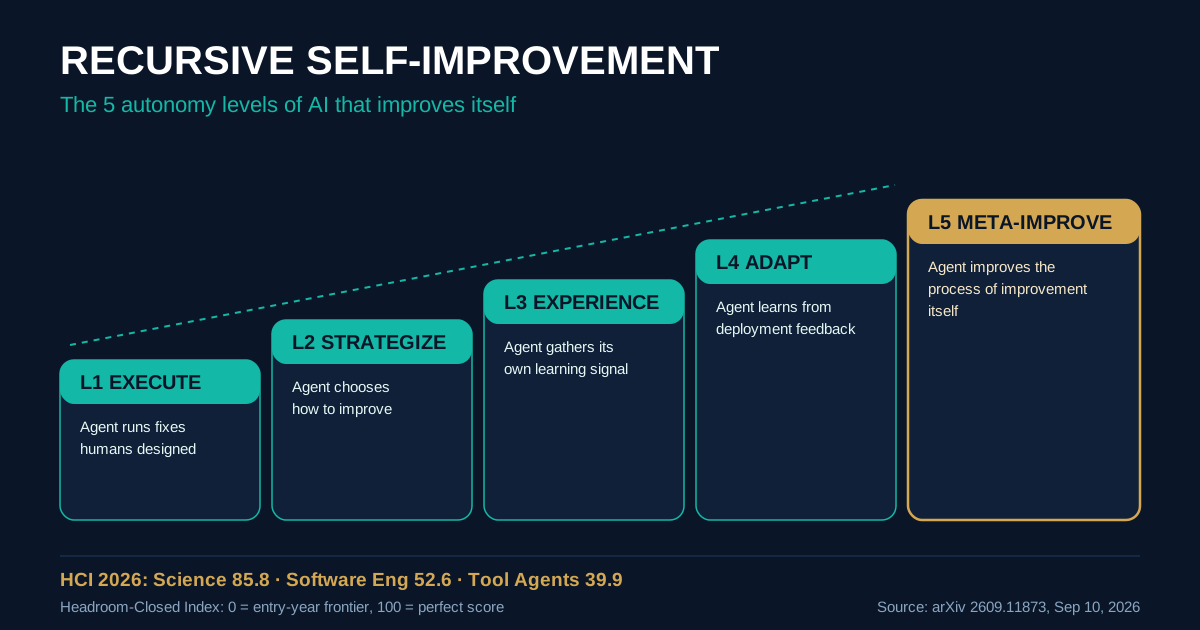
What Is Recursive Self-Improvement? 5 Autonomy Levels That Separate Real AI Self-Improvement From Hype

What Is Recursive Self-Improvement? 5 Autonomy Levels That Separate Real AI Self-Improvement From Hype

A 33-author survey (arXiv 2609.11873) maps recursive self-improvement across five autonomy levels and a Headroom-Closed Index that shows where LLMs stall. Here is what it means, where it works today, and how to audit self-improving agent claims.

13 September 202613 min read
Read more
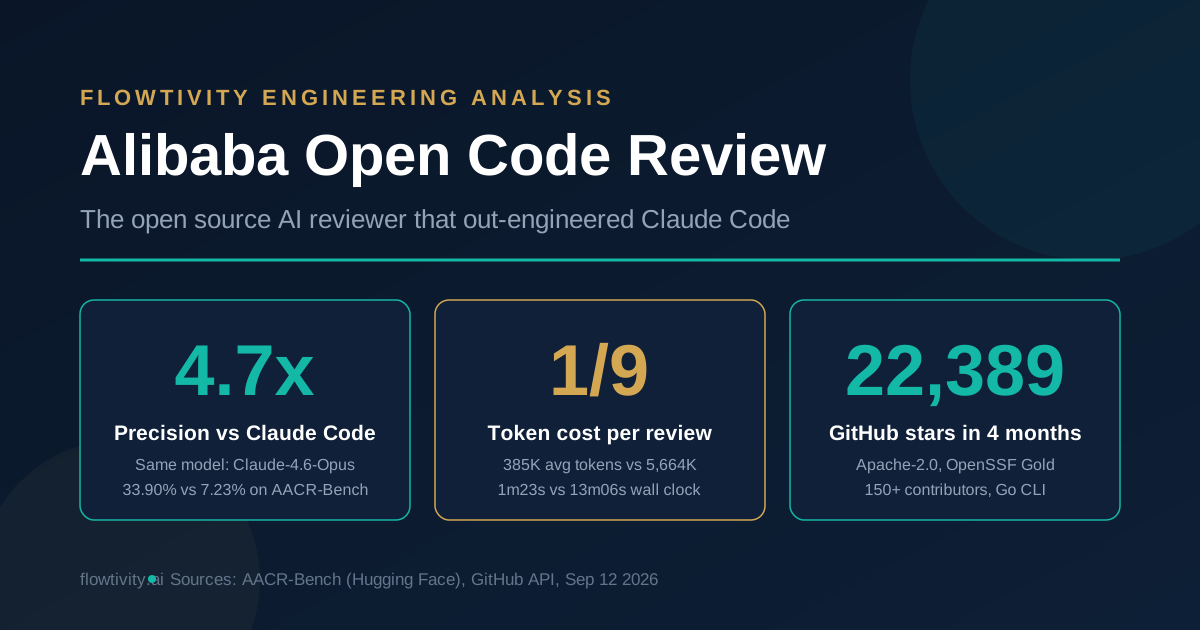
Alibaba Open Code Review: The Open Source AI Reviewer That Out-Engineered Claude Code

Alibaba Open Code Review: The Open Source AI Reviewer That Out-Engineered Claude Code

Alibaba's open source AI code reviewer scored 33.90% precision versus Claude Code's 7.23% with the same underlying model on AACR-Bench, at roughly one ninth of the token cost. How the hybrid architecture works, benchmark numbers, our first-hand install test, and how to deploy it.

12 September 202611 min read
Read more
Harness Engineering Explained: What Meta's Auto-RecSys Means for AI in Business

Harness Engineering Explained: What Meta's Auto-RecSys Means for AI in Business

Harness engineering, the craft of building memory, scripts, and playbooks around an AI model, cut operational failures roughly 87 percent in Meta's Auto-RecSys. Here is what happened and how any business can apply it.

12 September 202615 min read
Read more
Anthropic's 2030 Economy Report: What It Means for Trades, Construction and Small Business

Anthropic's 2030 Economy Report: What It Means for Trades, Construction and Small Business

Anthropic's September 2026 report models three AI futures for 2030: GDP up 1.6% to 32.4%, unemployment from 4.6% to nearly 12%, and rising wages for trades and construction while knowledge work automates. Here is what it means for Australian trade, construction and allied health businesses.

11 September 202612 min read
Read more
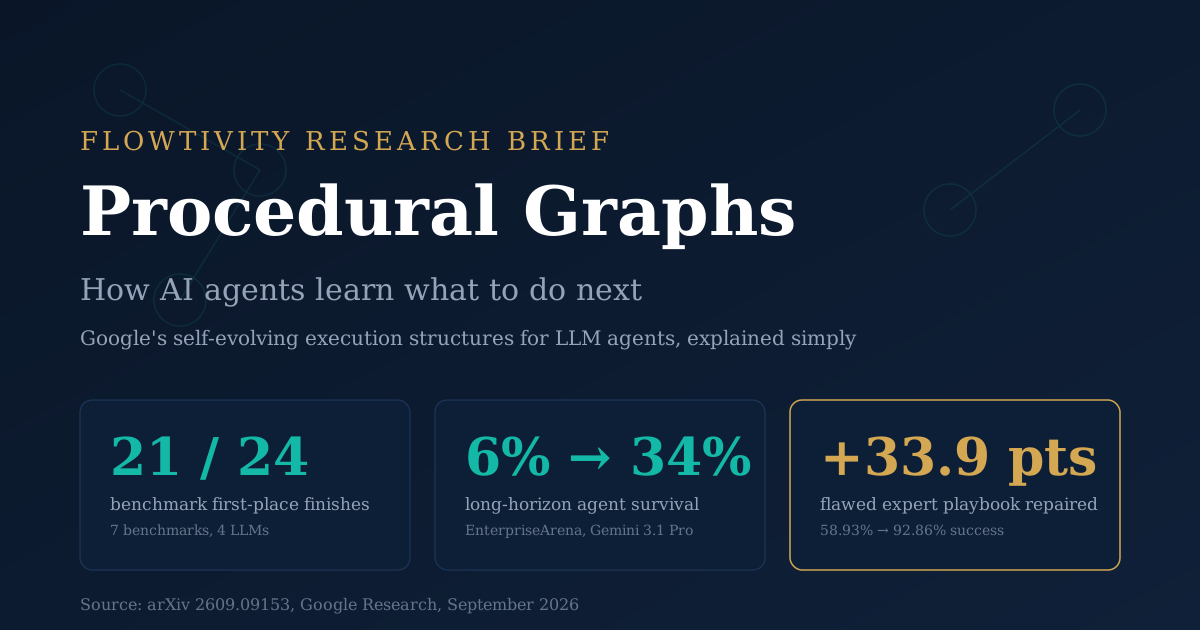
Google's Procedural Graphs, Explained Simply: The Self-Evolving Playbook for AI Agents

Google's Procedural Graphs, Explained Simply: The Self-Evolving Playbook for AI Agents

Google's Procedural Graphs paper gives LLM agents editable what-to-do-next knowledge as a graph, evolved automatically from execution feedback. First in 21 of 24 benchmarks.

10 September 202617 min read
Read more